
Case Study
Solvent Recovery as Part of an Innovative Catalyst Recycling Process for PEM Fuel Cells
October 2025
- Hei-VAP Industrial
- Hei-VOLUME
- Automatisation
- Distillation
- Évaporateurs rotatifs à grande échelle
Customer: Hensel Recycling GmbH (Germany)
Industry: Sustainable Materials / Fuel Cell Technology / Solvent Recycling
Application: Separation of alcohol-water mixtures from recycled ionomer solutions
Background
As demand for sustainable energy technologies grows, PEM (Proton Exchange Membrane) fuel cells are gaining importance for both stationary and mobile applications. Within this context, the EU-funded BEST4Hy project (Grant Agreement No. 101007216) focuses on developing environmentally sound and economically viable recycling methods for fuel cell components.
One of the most critical parts of a PEM fuel cell is the catalytic coated membrane (CCM), a composite structure containing precious metals, polymers (ionomers), and functional coatings. Recovering these valuable materials is essential to advancing a circular economy for clean energy.
Challenge
Conventional recycling approaches often use acid-based processes, which pose environmental risks, generate hazardous waste, and make solvent recovery difficult. Hensel Recycling GmbH developed an acid-free, eco-friendly solution to recover ionomers from used CCMs while maintaining process safety, reliability, and solvent efficiency.
Key process challenges included:
- Preventing carry-over of recycled ionomer during solvent evaporation, which would otherwise lead to material losses and solvent contamination.
- Handling batch sizes of 6–8 liters, originating from reactor processes and rinsing steps.
- Ensuring that the solvent (alcohol-water mixture) could be efficiently recovered and reused rather than disposed of, supporting both cost efficiency and sustainability.
Solution
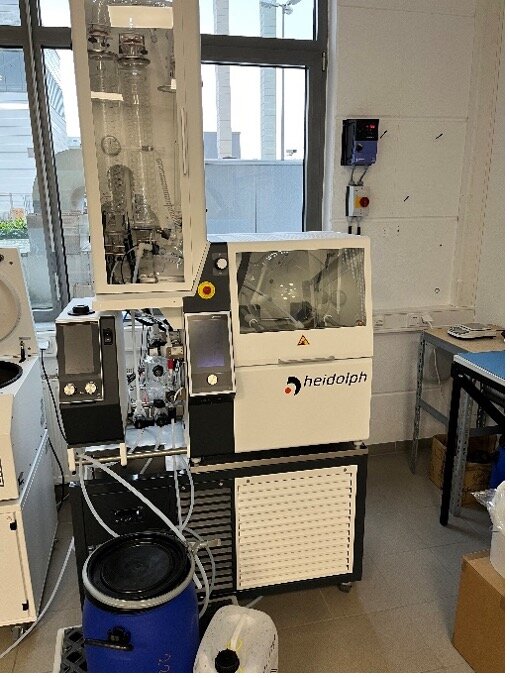
As part of BEST4Hy, Hensel Recycling developed a novel acid-free recycling process in which a water-alcohol mixture dissolves the recovered ionomer. This solvent mixture must then be separated and reclaimed. For this crucial step, Hensel Recycling relies on Heidolph Scientific Products, specifically:
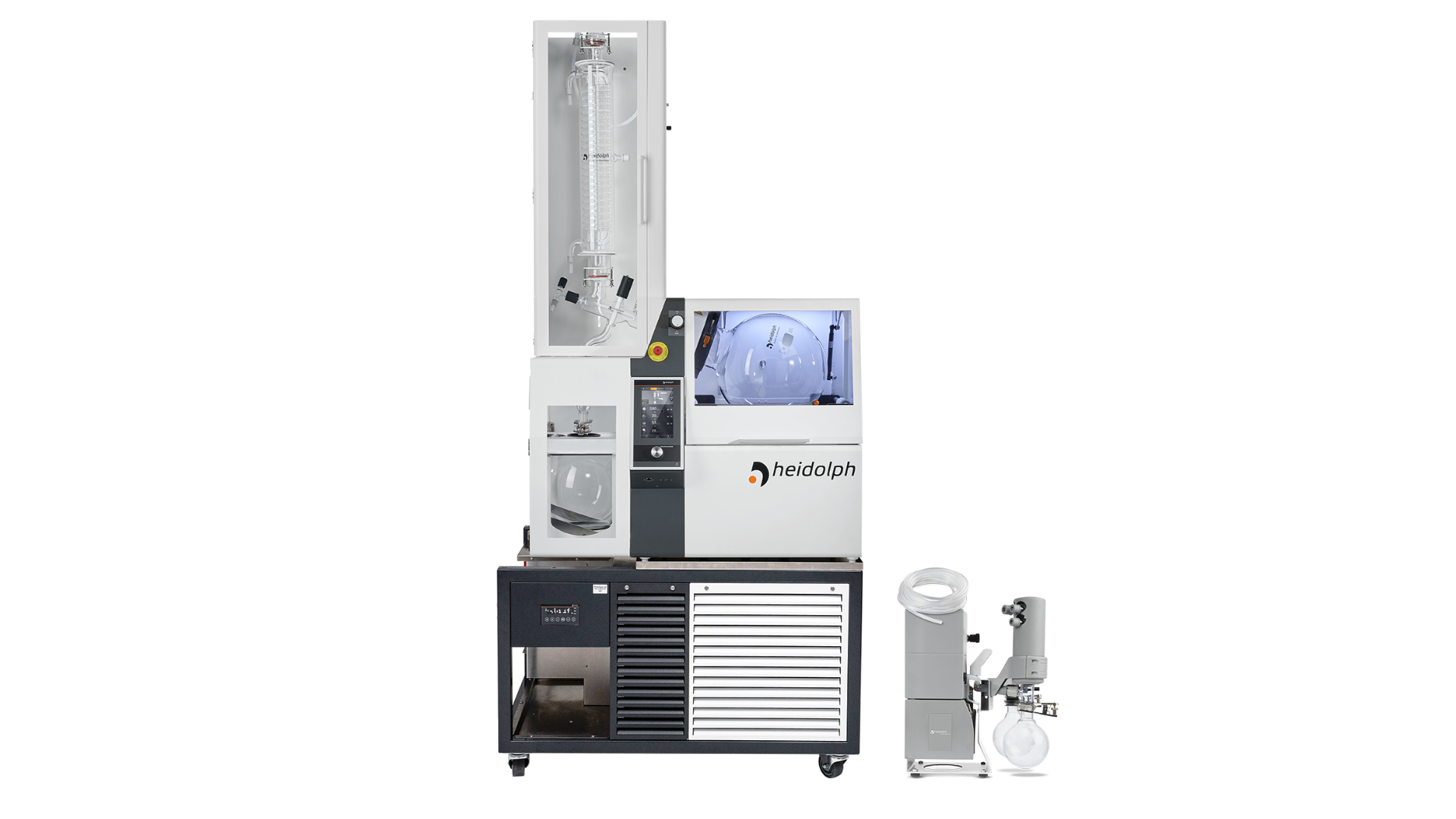
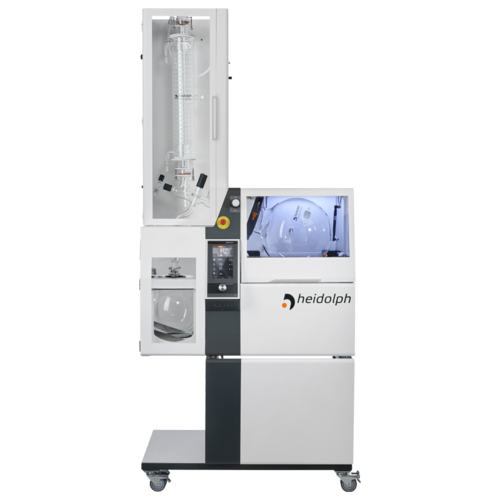
- Hei-VAP Industrial rotary evaporator
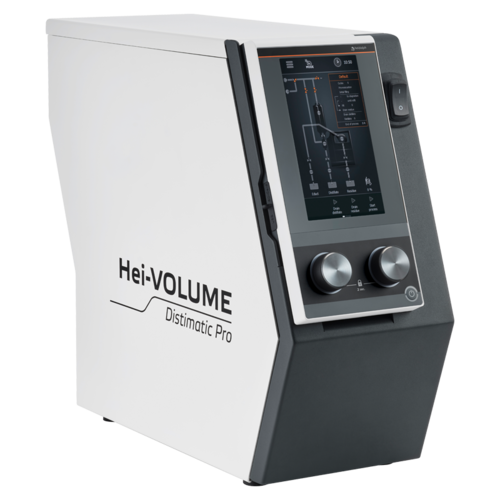
- Hei-VOLUME Distimatic Pro for continuous, automated solvent removal
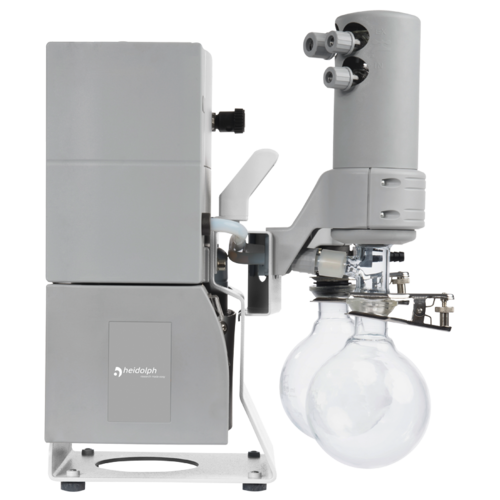
- Hei-VAC Valve Industrial for precise vacuum control
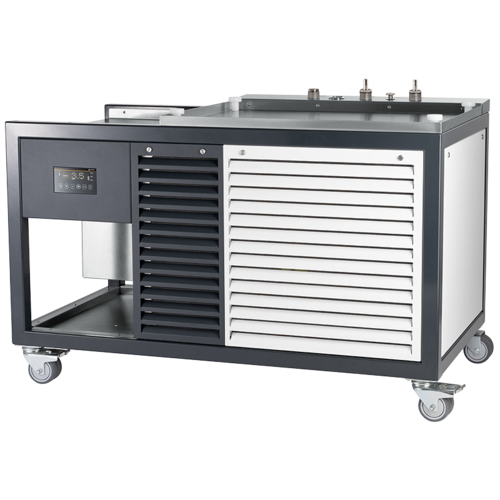
- Hei-CHILL 5000 Base Cart for efficient cooling
The Hei-VOLUME Distimatic Pro plays a central role by enabling:
- Large batch handling without removing the evaporation flask for refilling.
- Continuous, unattended operation for maximum process efficiency.
- Fine-tuned temperature and pressure control to ensure gentle evaporation.
To avoid ionomer loss, the process is run under carefully balanced conditions with gentle heating and controlled pressure increases. This ensures reliable solvent recovery without contamination of the recovered ionomer.
Results and Benefits
- Efficient ionomer recovery: The concentrated ionomer solution is prepared for reuse in the recycling process.
- Solvent reuse: The alcohol-water mixture is not discarded but recovered for use in subsequent recycling steps or for reactor cleaning.
- Minimized environmental impact: The process eliminates the use of acids and reduces solvent waste.
- Operational efficiency: Automated solvent recovery saves time and enables consistent, reproducible performance.
- Contribution to circular economy: Valuable fuel cell materials are recovered in a sustainable, eco-friendly manner.
Conclusion
By integrating Heidolph evaporation technology into its CCM recycling process, Hensel Recycling GmbH demonstrates how sustainable and acid-free solvent recovery can support the hydrogen economy of the future. The combination of Hei-VAP Industrial and Hei-VOLUME Distimatic Pro enables efficient large-scale solvent separation, making an essential contribution to the circular economy of PEM fuel cells and supporting the EU’s commitment to clean, innovative energy solutions.
Produits d'occasion
Hei-VOLUME Distimatic Pro Benchtop